The Next Chapter of AI in Collections Is Ours to Shape
My new role as Chief Strategy and Innovation Officer at AKUVO centers on a fundamental question: How do we translate emerging technology into meaningful, responsible progress for the collections industry?
I had the opportunity to explore that question directly with collections leaders during a panel at our Roadmap conference. From the stage, we conducted live polling on digital engagement, AI, automation, and product priorities. The results showed an audience ready to explore agentic AI while maintaining clear human oversight as the technology develops.
That combination of ambition and practical judgment is exactly what this moment requires. Agentic AI presents a significant opportunity for collections, and our industry has an opportunity to define how it is introduced, governed, and trusted.
Collections teams already see the value of AI-generated summaries, predictive insights, recommendations, and digital self-service. The next conversation is about AI that can pursue a defined objective, coordinate a series of tasks, and take approved actions within a collections process.
There is real opportunity here. There is also a responsibility to help people understand what this technology means, how it can be governed, and where it can make collections better for teams and account holders alike.
At AKUVO, I believe that responsibility belongs to us.
Interest Is Growing, and So Is the Conversation
At AKUVO’s 2026 user conference, more than 150 collections professionals from banks and credit unions participated in live polling about digital self-service, AI, automation, and product priorities. When participants could choose only one platform enhancement, 61% selected agentic agents.
-png.png?width=1500&height=900&name=Agentic%20AI%20Stats%20(5)-png.png)
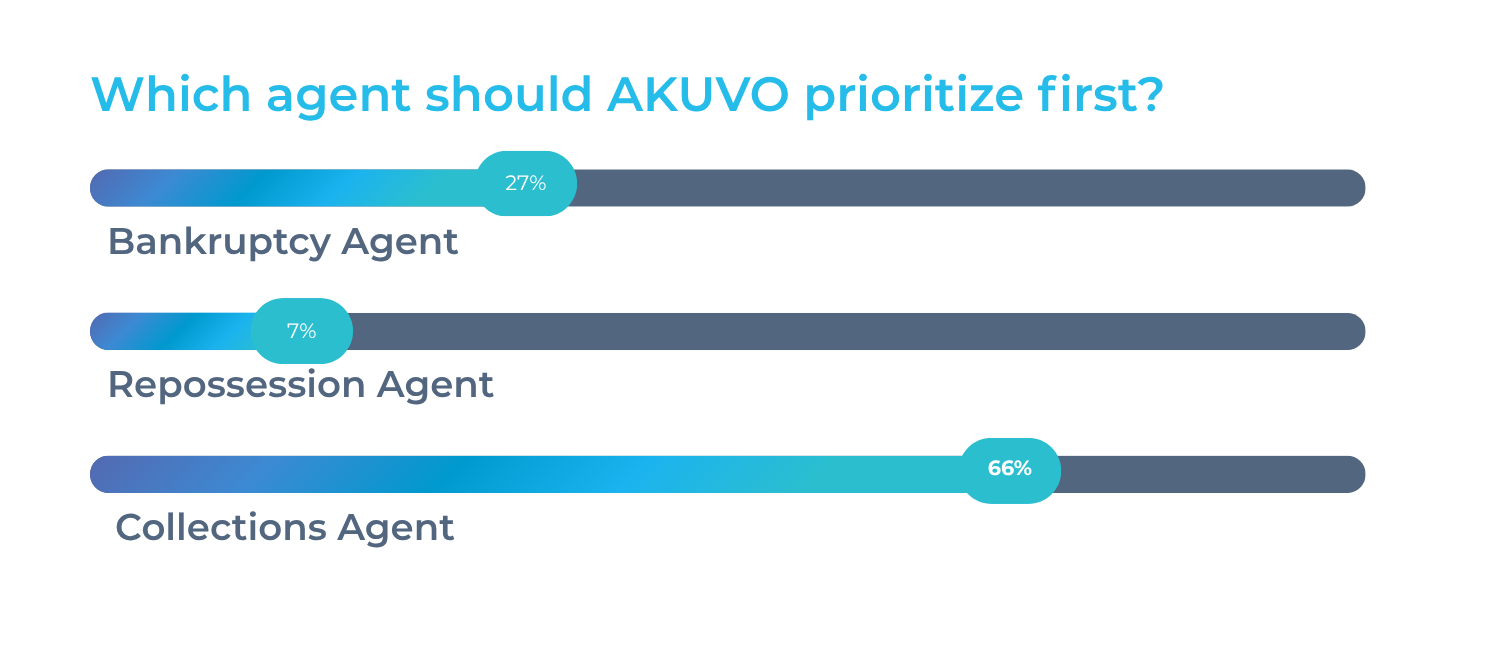
When we asked which AI agent AKUVO should prioritize first, 66% chose a Collections Agent, compared with 27% for a Bankruptcy Agent and 7% for a Repossession Agent.
That response tells me collections professionals are ready to explore what comes next.
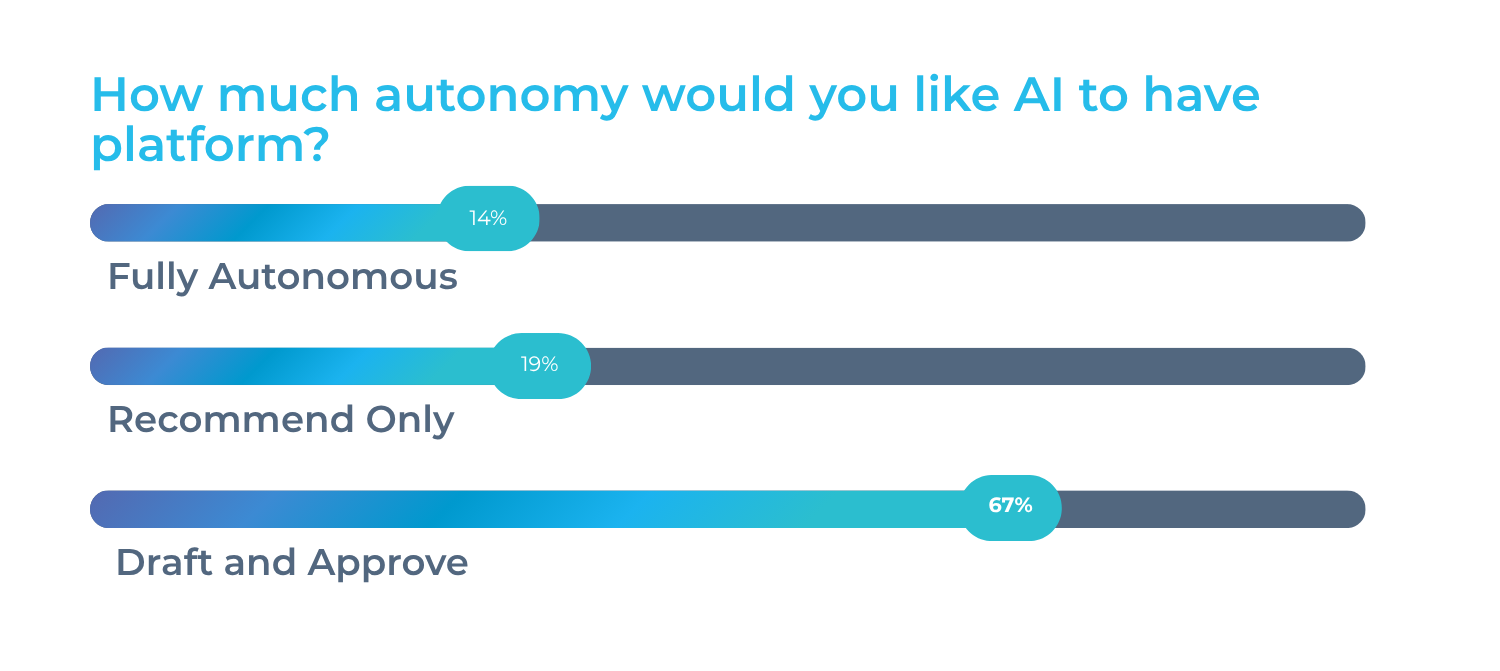
Their views on autonomy add helpful context. Sixty-seven percent preferred a “draft and approve” approach. Another 19% wanted recommendation-only support, while 14% selected full autonomy.
These results feel like a healthy place to begin. Teams recognize the potential of agentic AI, and they want to build trust through experience. That is how meaningful technology adoption should work.
Today, an AI agent might gather information, interpret a document, prepare a recommended action, and ask a collector to approve it. As teams gain confidence, the agent could receive authorization to complete certain routine, policy-defined actions independently.
Autonomy can grow alongside understanding, evidence, and trust.
What Agentic AI Means for Collections
Clear language matters when technology is evolving quickly.
A predictive model uses data to identify a pattern, signal, or probability. An AI assistant helps a person understand information or prepare a response. An AI agent can pursue an assigned objective by determining and coordinating a series of actions within its authorized boundaries.
For collections teams, an agent could help monitor case activity, interpret incoming information, maintain account context, prepare next steps, and route an exception to the appropriate person. These are practical applications within work that teams already perform. An AI agent can help bring relevant information together and manage authorized, routine steps.
The goal is to give collectors more capacity for the conversations and decisions where their experience matters most.
Safe Autonomy Starts with Clear Boundaries
Autonomous AI should be practical, observable, and well governed.
An AI agent needs a defined objective and a clear scope of authority. The financial institution should determine which information the agent may access, which actions it may take, which situations it must escalate, and which decisions require human review.
Collections already operates through policies, procedures, approval thresholds, workflows, and exceptions. Teams can translate their existing policies into explicit operating boundaries for an agent. They can monitor its actions, evaluate results, and adjust its authority as they gain experience.
This is what makes responsible autonomy possible. Safety comes from clear authority, effective oversight, and accountability for the results.
People Will Remain Essential
I am optimistic about greater AI autonomy because I am equally confident about the continuing importance of people.
Hardship discussions, disputes, complaints, bankruptcies, and other sensitive financial situations may call for empathy, flexibility, and contextual understanding. Collectors bring experience and judgment to these moments.
Human involvement should be intentional. Some decisions deserve careful review because of their complexity or potential impact. Other actions are routine, clearly defined by policy, and well suited to responsible automation.
As technologists, we should design AI around the realities of collections. As an industry, we should continue defining where human judgment creates value, where an agent can act reliably, and how responsibility remains clear in both cases.
Education Builds Confidence
Every important technology shift has required people who are willing to explain it clearly.
Collections leaders need a practical understanding of agentic AI. They should know how an agent differs from a predictive model or AI assistant, how autonomy can be introduced gradually, what governance it requires, and how its actions can be reviewed and measured.
At AKUVO, our work gives us both the opportunity and the responsibility to support that education.
We should answer difficult questions openly. We should make the technology understandable without oversimplifying it. We should help collections teams evaluate where agents can add value, establish appropriate guardrails, and learn from every stage of adoption.
Our role is to help people approach AI with confidence grounded in knowledge.
That means listening closely to the people doing the work. It means involving collections professionals in decisions about how agents operate and when human judgment should take precedence. It also means sharing what we learn so the industry can move forward together.
Moving Forward Together
I believe agentic AI will become an important part of collections.
It can help teams act on information more quickly, apply defined policies more consistently, and create additional capacity for meaningful account-holder engagement. Its value will grow as organizations gain experience and expand its authority thoughtfully.
We do not need to rush toward complete autonomy. We should keep learning, testing, and asking good questions.
A responsible path is already taking shape. Start with a clear use case. Define the agent’s authority. Keep its actions visible. Measure the results. Involve people wherever judgment adds value. Expand autonomy as the evidence supports it.
I’m excited about what collections teams can accomplish with this technology. The people who understand collections best should have a strong voice in shaping how agentic AI develops and how it is used.
AKUVO can help bring the technology and collections communities together. We can explain what is possible, listen carefully to concerns, and help teams take each step with clarity.
The next chapter of AI in collections will be shaped by the choices we make now. If we lead with curiosity, care, and a shared commitment to responsible progress, I believe it will be a very good one.

Leave a Reply